

Gặp phải chủ đề lạ hay câu hỏi hóc búa trong phòng thi Speaking Part 1 thường khiến nhiều thí sinh lúng túng và mất điểm trôi chảy. Tuy nhiên, tiêu chuẩn Band B2 không yêu cầu bạn phải trả lời hoàn hảo mọi kiến thức, mà đánh giá cao khả năng phản xạ và xử lý tình huống linh hoạt. Bài viết này, Edulife sẽ bật mí những tuyệt chiêu xử lý câu hỏi khó Speaking Part 1 – Band B2 giúp bạn tự tin ghi điểm tối đa.
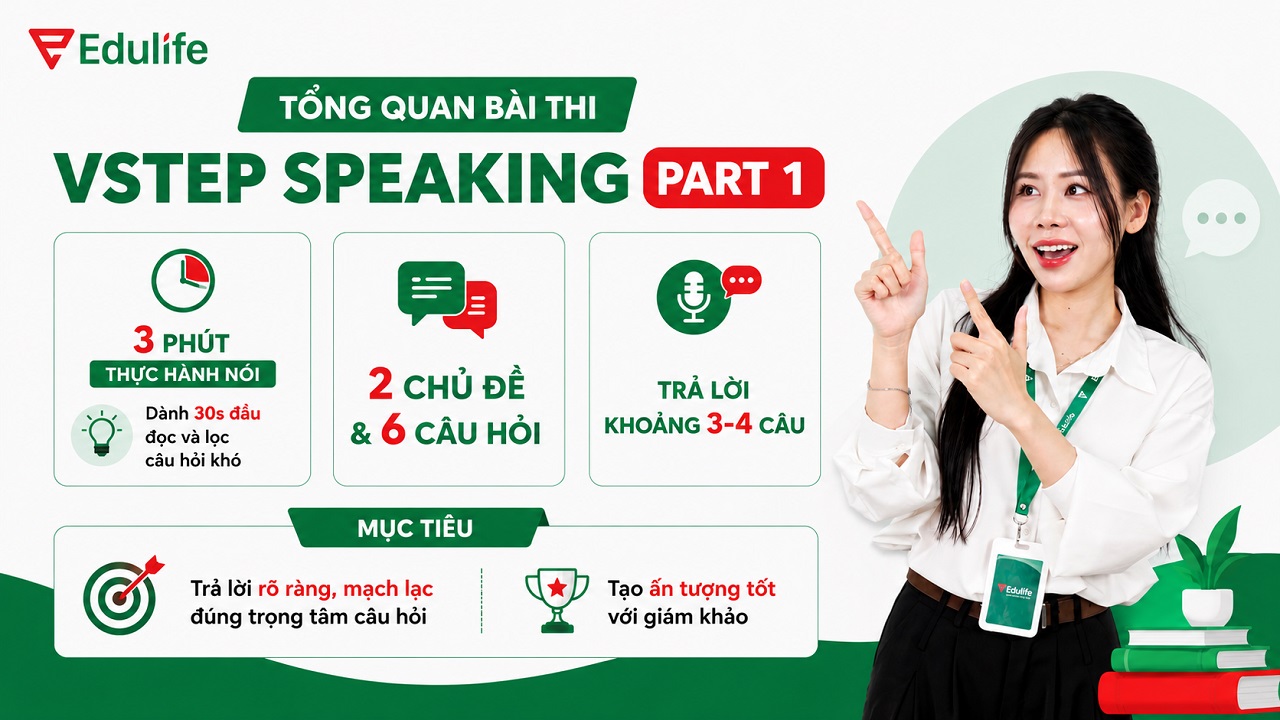
Tổng quan bài thi Speaking Part 2
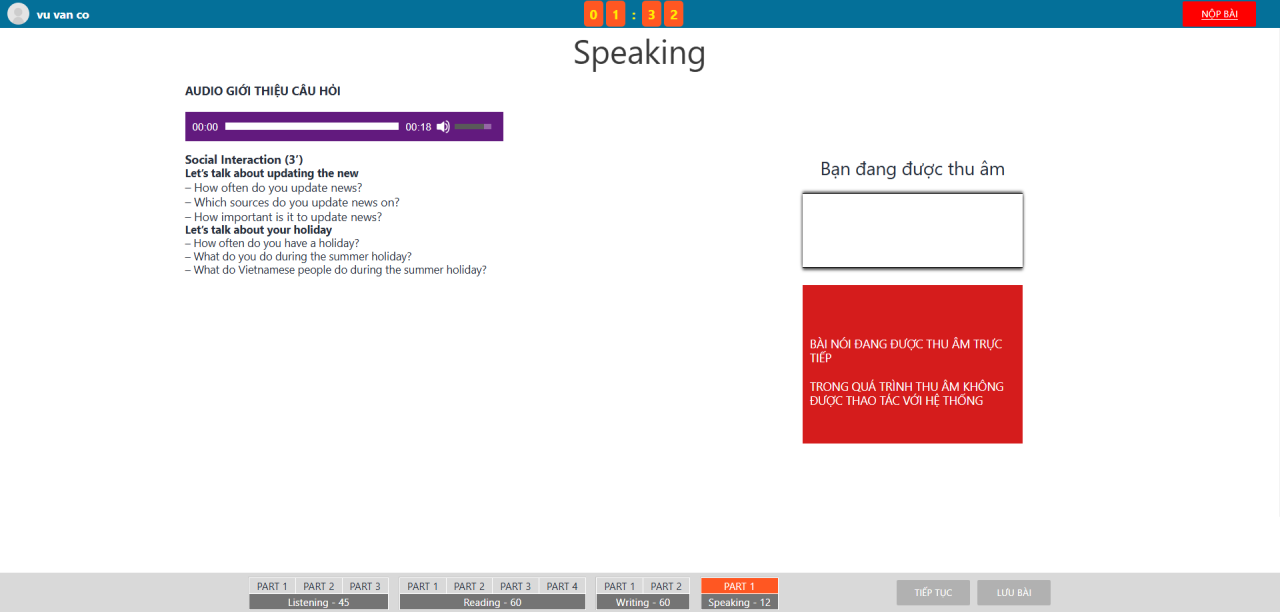
- Có 3 phút thực hành nói (dành 30s đầu đọc là lọc câu hỏi khó)
- Có 2 chủ đề và 6 câu hỏi
=> Trả lời từ 3-4 câu là ổn.
Gợi ý cách làm để đạt B2
(Tìm tiêu chí chấm Speaking VSTEP để đọc)
- Ý tưởng: diễn giải 2-3 ý với 1 câu hỏi.
- Từ vựng: tránh lặp từ, sử dụng tương đối linh hoạt, + từ vựng band B2.
- Ngữ pháp: câu đơn, câu phức (câu mệnh đề, câu điều kiện), câu ghép, nên đa dạng về thì/
- Phát âm + độ trôi chảy
- Dành ít nhất 15’ mỗi ngày luyện nói
- Dùng đi dùng lại cấu trúc quen
Chuẩn bị “cấu trúc trả lời” xử lý giúp mình tiêu chí:
- Ý tưởng
- Từ vựng: 1 phần
- Ngữ pháp
Hướng dẫn cách làm bài Speaking Part 1 để đạt band điểm B2
Thực hành làm bài
Let’s talk about traveling
- Do you enjoy traveling? Why or why not?
Yes, because it is interesting, and it can help me relax and explore new cultures. Actually, I usually travel with my friends on some special days, and I love it!
- What types of places do you like to visit when you travel?
Well, it depends on my timetable. When I have a short vacation, I love going to some destinations that are near me such as my hometown, zoos, or malls. But when I have long days off, I tend to visit some foreign countries because it will enrich my experiences.
- When you travel, do you prefer going alone or with friends/family?
I used to be a big fan of solo trips when I was in university. But now, I tend to travel with my friends or my family because it will help strengthen our relationships and capture more memories. You know, when you grow up, it’s so hard to meet all your friends and family.
Let’s talk about recycling
- Do you recycle things at home? Why or why not?
Yes, because it is necessary and useful. Actually, I usually recycle plastic bottles and paper with my family at home every day. Besides, because it can help me save money and keep my environment clean.
- What kinds of items do people in your country usually recycle?
In my country, there are some common items such as plastic bottles, old newspapers, and cardboard boxes. People usually collect them at home because it is convenient and then give them to recycling centers. Therefore, people can have more motivation to protect the environment.
- Do you think recycling is important?
Yes, because it is very essential. Because it can help people reduce pollution and conserve natural resources. In fact, I think recycling is great because it can make our lives healthier, and everyone should do it every day.
Trọng tâm + phát triển câu trả lời (2-3 câu) + nên có những từ thể hiện cảm xúc (trạng từ, discourse marker,…).
Bước 1: Trả lời trọng tâm
| Câu hỏi Yes/No (bắt đầu bằng những trợ động từ “Do, does, did, are, is, have, could, can, would,…”) | Câu hỏi WH (what, when, why, where, which, how, how often, how long, how much/how many,…) | Câu hỏi lựa chọn (cuối câu hỏi xuất hiện A or B) |
| Yes hoặc No (hoặc là từ đồng nghĩa của Yes: Of course, Definitely, Sure, Why not,… No: Not really, It’s a big no for me,…) Ex: Do you like reading books? – Yes/No | Trả lời theo yêu cầu đề bài đúng cấu trúc ngữ pháp. hoặc sử dụng cấu trúc It’s + đáp án tương ứng với từ để hỏi Ex: What films do you like? – I like Titanic movie – It’s Titanic movie Who are you close to in your family? – I’m close to my mom in my family. – It’s my mom | – It depends. (thích cả 2). Ex: Do you like doing exercises alone or with someone else? – I prefer doing exercises alone. Ex: Which one do you like: hot weather or cold weather? – I prefer hot weather. |
Bước 2: Phát triển câu trả lời
| Why: giải thích lý do | 3W1H: who, where, when, how often |
| Nêu tính chất của chủ thể because it is + tính từ Ex: Do you like reading books? – Yes, because it is interesting and informative/fun – No, because it is very boring | I/we + usually/sometimes/ always + V + with whom + where + when Ex: Do you like reading books? Yes. I usually read books with my friends in the library in my free time. |
| Nêu công dụng của chủ thể Sử dụng cho câu trả lời “yes”: Because it can help me/people + động từ thông dụng Ex: Do you like reading books? Yes because it can help me gain knowledge (có thêm kiến thức) Sử dụng cho câu trả lời “no”: Because it can make me/people + động từ thông dụng Ex: Do you like reading books No, because it can make me feel tired. Ex: Do you like going shopping? Yes, because it can help me reduce stress. No, because it can make me feel tired. | *lưu ý không nhất định phải đầy đủ 3W1H, có thể chỉ cần 1W hoặc 1H là đã đủ để phát triển câu trả lời. Ex: Do you like reading books? Yes. I usually read books with my friends. |
⇒ nên kết hợp 2 cách
| Nước đôi | PPF (past – present – future) liên hệ tới quá khứ, hiện tại, tương lai |
| It depends on situations/my feelings/my timetable. Sometimes/When I’m in a good mood/When I’m busy, I/we + V because it is + tính từ. Other times/When I’m upset/When I have free time, I/we + V because it is + tính từ Ex: Do you like reading books? – It depends on my timetable. When I have free time, I love reading books at home because it can help me relax. When I’m busy, I prefer surfing the Internet because it is convenient. | I used to + V + in the past. But now, I tend to + V. In the future, I hope that I can + V. Ex: Do you like reading books? – I used to read a lot of books in the past. But now, I tend to watch Youtube videos. In the future, I hope that I can read more books because it is good for my brain. When do you drink coffee? I used to drink coffee in the morning because it can help me stay awake. But now, I usually drink coffee before noon because I am quite busy in the morning. |
– Kể chuyện cá nhân
– Liệt kê hoặc đi chi tiết về 1 vấn đề được.
Xử lý câu hỏi khó không nằm ở việc đoán đúng đáp án, mà ở cách bạn duy trì phản xạ và kiểm soát ngôn ngữ linh hoạt. Áp dụng ngay những chiến thuật trên sẽ giúp bạn làm chủ phần thi Speaking Part 1 – Band B2 một cách tự nhiên và thuyết phục nhất.
Xử lý câu hỏi khó không nằm ở việc trả lời hoàn hảo, mà ở cách bạn duy trì phản xạ linh hoạt trước giám khảo. Áp dụng ngay những chiến thuật Speaking Part 1 – Band B2 mà Edulife chia sẻ trên để tự tin bứt phá điểm số trong kỳ thi sắp tới!